Weight loss / gain
How to read BCS (body condition score)
BCS is a widely used way to describe a dog’s body condition–from underweight to obese. Weight affects quality of life: mobility, heart and organ health, and even mood.
We ask you to log BCS with each weighing so we can track weight changes and calculate daily calories more accurately.
Please bear in mind that if your dog has a thick coat, you may not see changes from the outside. In that case we recommend periodically feeling the ribs and abdomen.
Breed size (for illustrations)
Pick a size to show the matching illustrations
1. Extremely thin
- Ribs, lumbar vertebrae, pelvic bones and all bony prominences evident from a distance.
- No discernible body fat.
- Obvious loss of muscle mass.
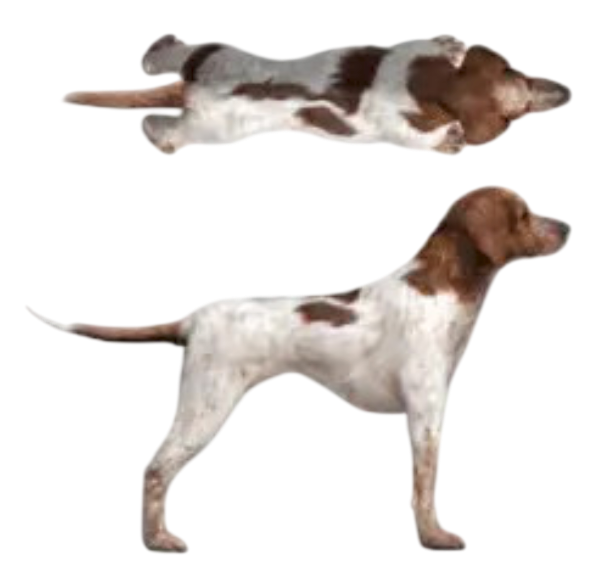
2. Very thin
- Ribs, lumbar vertebrae, pelvic bones easily visible.
- Some bony prominences visible from a distance.
- No palpable fat.
- Minimal loss of muscle mass.
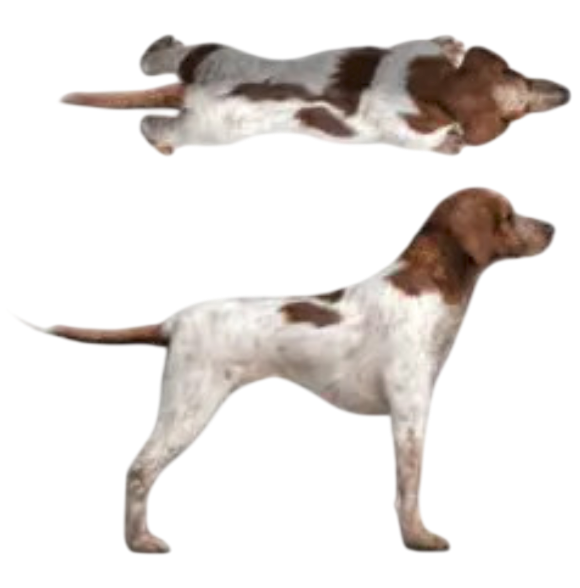
3. Thin
- Ribs easily palpable and may be visible with no palpable fat.
- Tops of lumbar vertebrae visible; pelvic bones becoming prominent.
- Obvious waist and abdominal tuck.
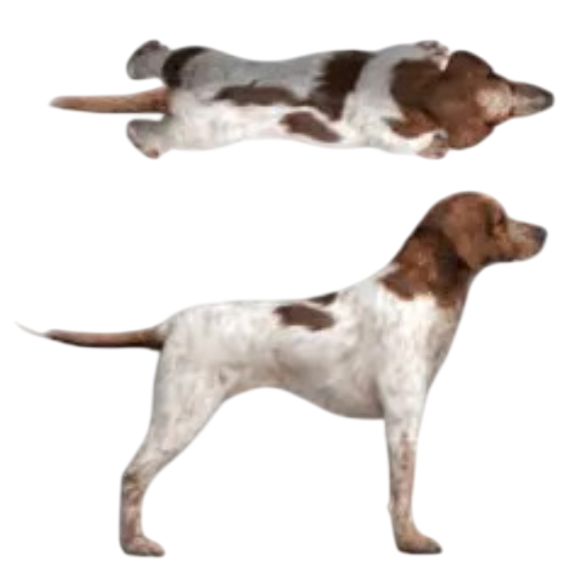
4. Normal weight
- Ribs easily palpable with minimal fat covering.
- Waist easily noted when viewed from above.
- Abdominal tuck evident.
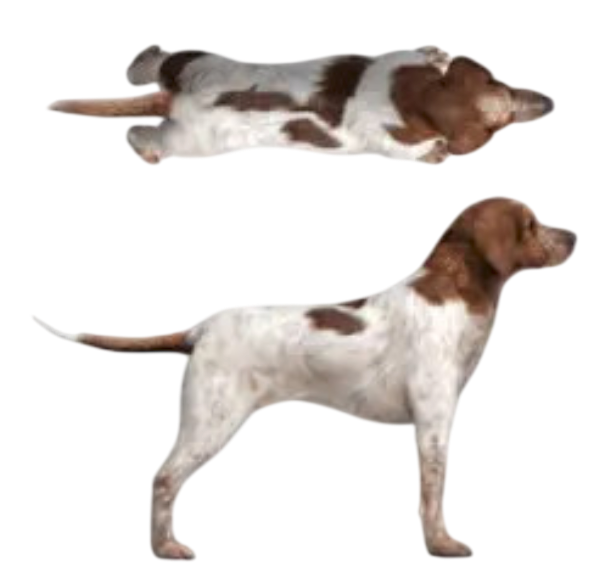
5. Ideal weight
- Ribs palpable without excess fat covering.
- Waist observed behind ribs when viewed from above.
- Abdomen tucked up when viewed from the side.
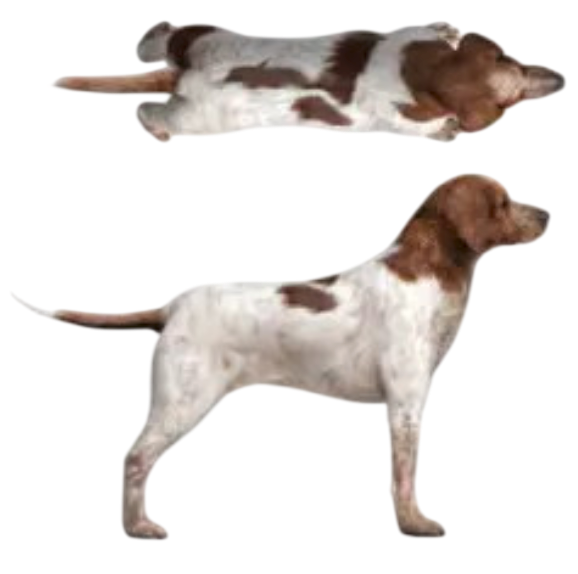
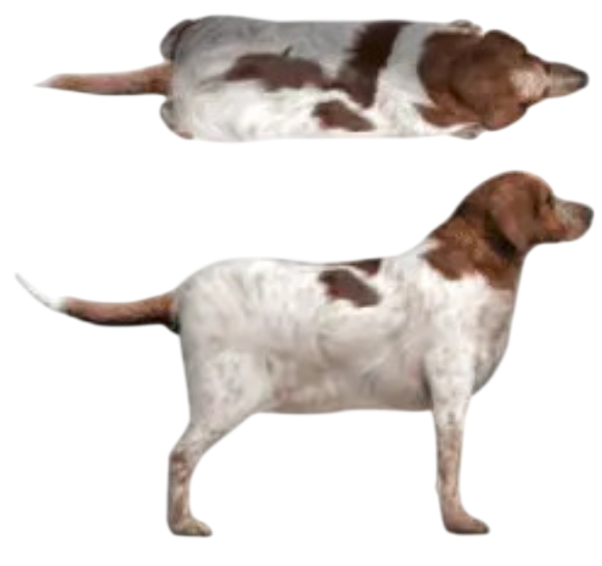
6. Overweight
- Ribs palpable with slight excess fat covering.
- Waist is discernible when viewed from above but is not prominent.
- Abdominal tuck apparent.
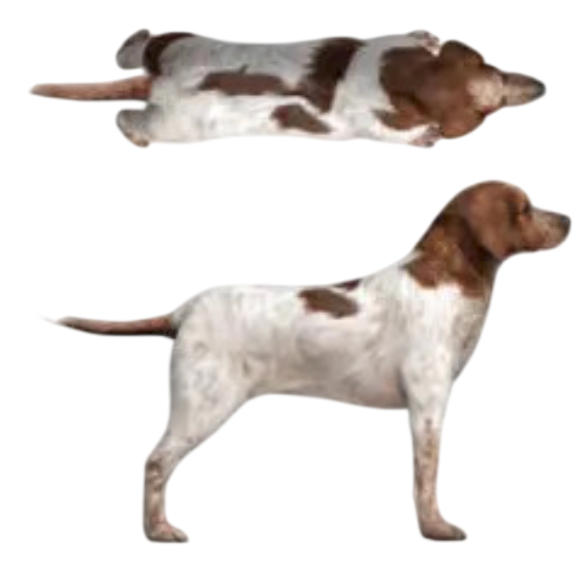
7. Heavy
- Ribs palpable with difficulty; heavy fat cover.
- Noticeable fat deposits over the lumbar area and base of the tail.
- Waist absent or barely visible.
- Abdominal tuck may be absent.
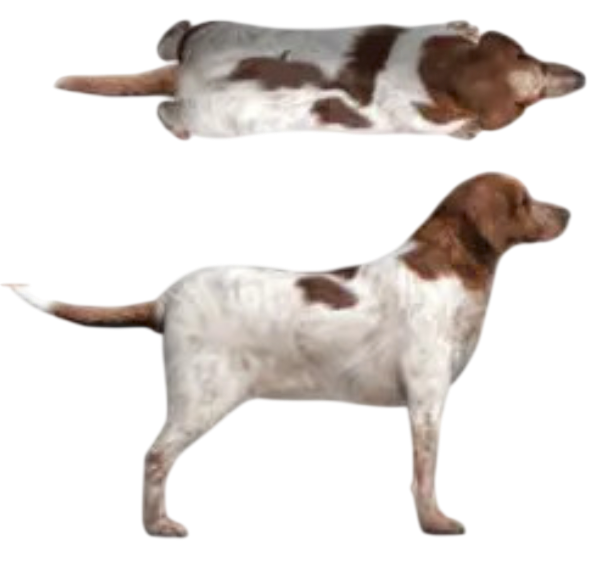
8. Obese
- Ribs not palpable under very heavy fat cover, or palpable only with significant pressure.
- Heavy fat deposits over the lumbar area and base of the tail.
- Waist absent.
- No abdominal tuck.
- Obvious abdominal distension may be present.
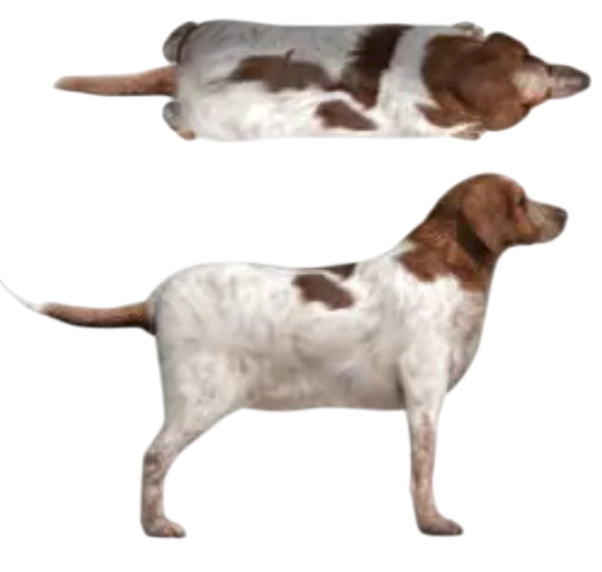
9. Severely obese
- Massive fat deposits over the thorax, spine, and base of the tail.
- Waist and abdominal tuck absent.
- Fat deposits on the neck and limbs.
- Obvious abdominal distension.
* Some of the material here is drawn from Royal Canin Weight Management Program.